
By Michael McDaniel, Technical Field Specialist
Before I joined the Continental Divide Trail Coalition (CDTC), the organization began a modest two-mile trail reconstruction project named the Neglected Mine Reroute. The project is set at the edge of a transitioning landscape, where the fringes of both the Chihuahuan and Sonoran Deserts blend with the impressive, mountainous terrain of the Gila Wilderness. It’s also an access point where the Continental Divide Trail (CDT) has long been a draw for Silver City community members and tourists. Until recently, trail users along this particular stretch of CDT faced only out-and-back recreational options, including a direct, grueling, valley-to-summit ascent of Jack’s Peak.
Thanks to CDTC’s efforts, combined with those of the U.S. Forest Service, Conservation Corps, volunteers, various funders, and other partner organizations, the Neglected Mine Reroute will join a new section of trail with the CDT to start the 2026 hiking season. With that addition, the completed project will increase trail connectivity and improve sustainability.
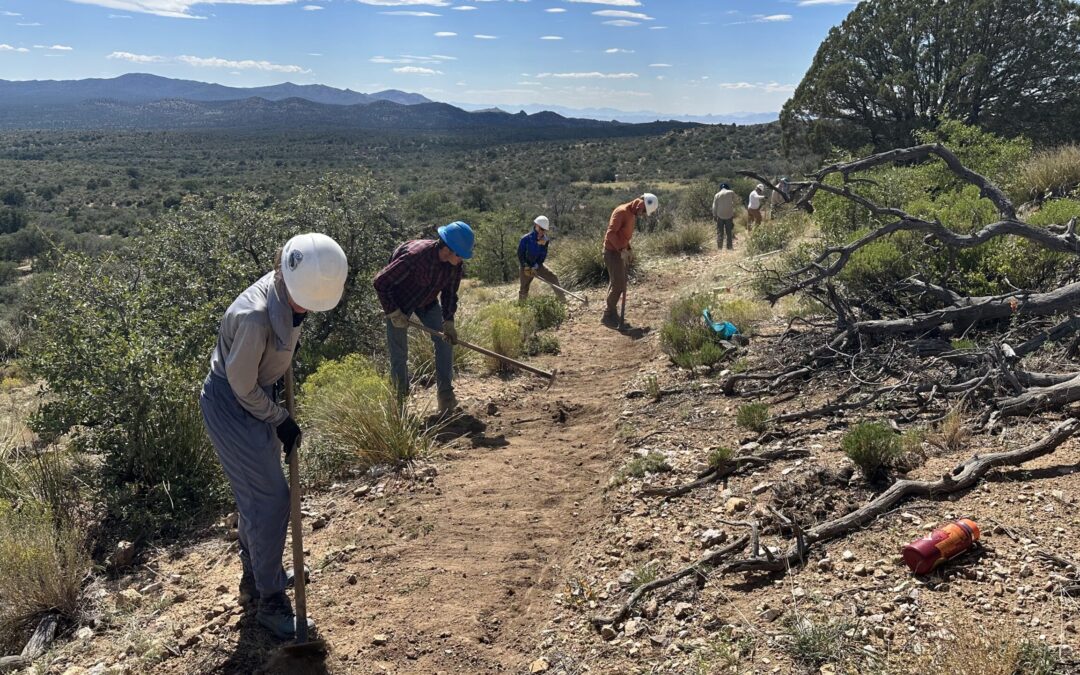
I’ve had the privilege of working on the Neglected Mine Reroute many times over the past three years: scouting, assessing, planning projects, and, my favorite, co-leading groups of volunteers on trail construction projects as a part of CDTC’s field staff. Together, we completed thousands of feet of full-bench trail construction, which required us to completely dig out the trail surface from the hillside and manage mountains of excavated soil. We completed climbing turns, retaining walls, and corridor clearing as sweat fell from our brows in the oven-like southern New Mexico sun.
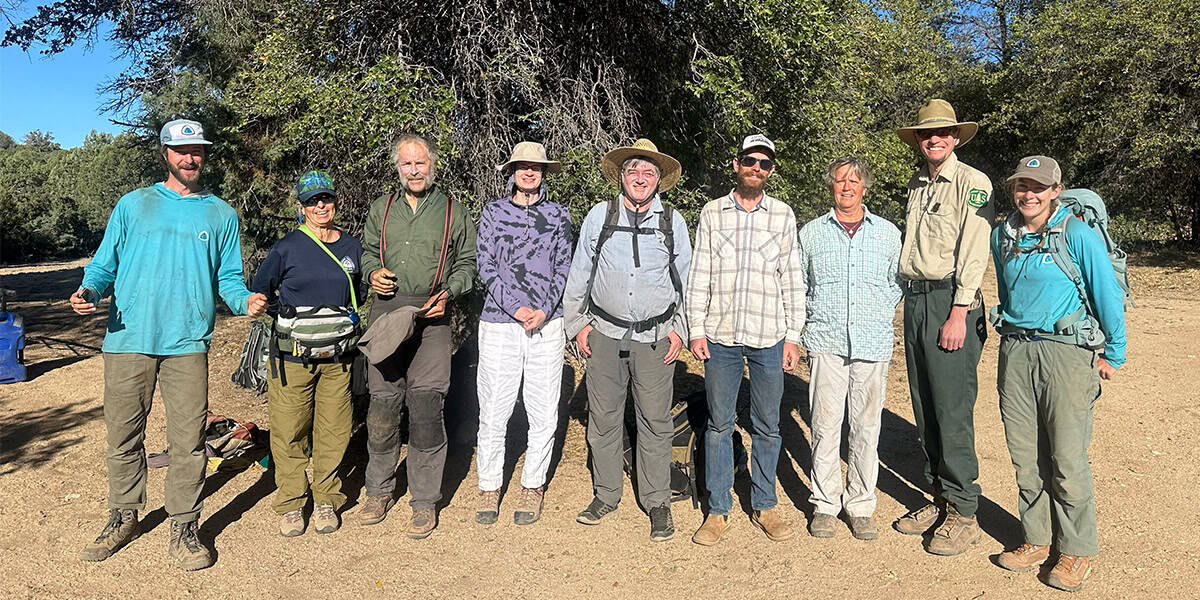
The exceptional crew of the 2025 Neglected Mine Reroute project.
Nothing quite compared, however, to our most recent and final project of constructing a rock wall-reinforced switchback. Using the landscape to our advantage, we created a turn in the ascending trail for all users—especially mountain bikers and equestrians—to enjoy. A winch-like device called a Grip Hoist allowed us to harvest large rocks, many of them over 500 pounds, and place them strategically below the switchback. These rocks accumulated over the weekend-long project into a wall some 15 feet long and 6 feet high. On top of the wall, we were able to turn soil into a trail as it made its way up the hillside.
Back at camp, our crew chefs whipped up inspiring dishes for the hungry volunteers. We sat down, exhausted in the rosy evening light, regaling one another with stories from old projects and hiking adventures.
This final project on the Neglected Mine Reroute was made possible by the generous support of Toyota and OnX Maps. They also sent a film crew to the project to capture our daily life as a trail crew, amplifying the sometimes overlooked stories of trail maintainers. We were even treated to a New Mexico Green Chile, Apple, Piñon Pie from CDTC’s Executive Director, Teresa Martinez, who happened to be one of the weekend’s crew chefs.
Now, with the switchback and almost every segment of the reroute completed, Neglected Mine is poised to open up new recreation opportunities at the Jack’s Peak Trailhead. The original CDT route is not slated to be closed but will be added to, creating a loop for trail users about 3.5 miles in total distance. Views are significantly more inspiring as the new route gains elevation, showcasing the region’s unique and biodiverse Sky Islands.
The new route plans to link up with the existing Jack’s Peak trail, allowing anyone going longer distances on the CDT to gain Jack’s Peak via a modestly graded climb. One major benefit of this design of a more graded trail is less susceptibility to erosion; and, therefore, it is more physically and economically sustainable, requiring less maintenance over time. Upon completion of the Neglected Mine reroute, many trail users stand to benefit from the improvements.
It’s an accomplishment. You feel that you’ve done something, observed something. There’s camaraderie in experiencing it together.
“People hike trails for various and assorted reasons,” noted Carol Martin, a longtime CDT volunteer and participant with the recent switchback project. “They may want to self-heal, to get out and depend on themselves, explore the environment. Most people want to hike on trails because they want to put their boots on the ground, literally becoming grounded. It’s an exploration—a personal exploration. It’s an accomplishment. You feel that you’ve done something, observed something. There’s camaraderie in experiencing it together. There are always trials and tribulations… It’s a discovery.”
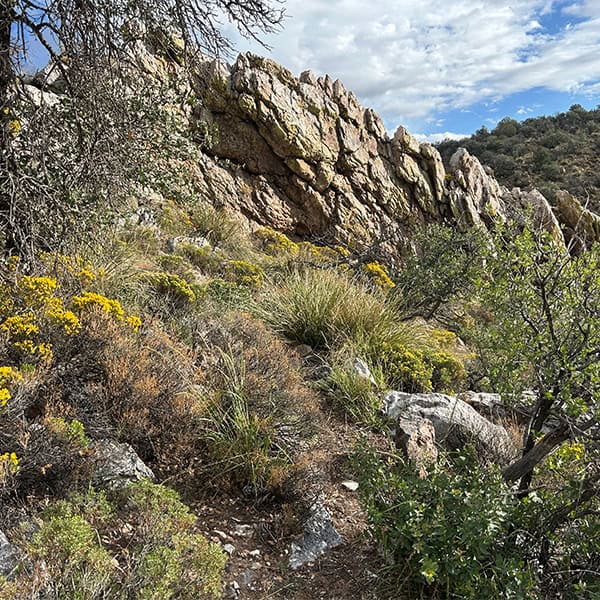
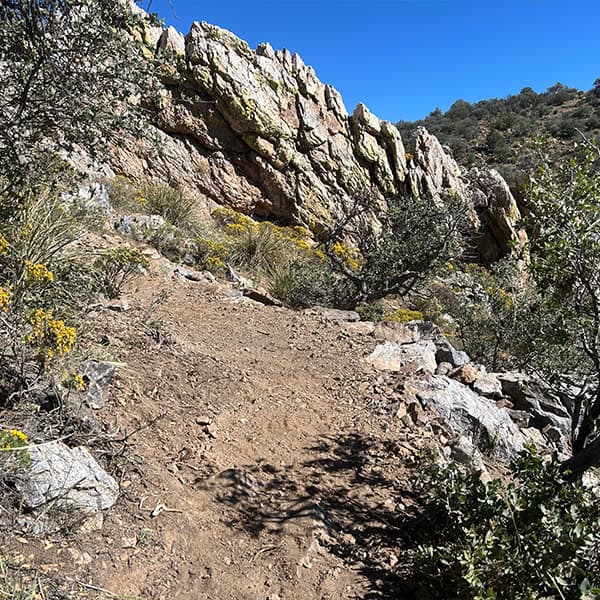
Before and after the trail project: A switchback constructed on the Neglected Mine Reroute.
Without the tireless dedication of land managers, trail builders, private organizations, and volunteers, opportunities for this type of discovery would be significantly less accessible.
“It’s why I do this work,” she went on to say. “I want to give back to these people. Bumping into them on the trail or while restocking a water cache, they are always so appreciative.”
And Carol is not alone. In fact, what unites all groups involved in the Neglected Mine Reroute—and many trail maintenance projects across public lands—is a genuine desire to be of service. CDTC and others seek to provide safe and sustainable opportunities for folks to appreciate and commune with the natural environment. The final step to connect the Neglected Mine Reroute is scheduled to be completed during a CDTC volunteer project in the spring of 2026.
Please consider joining us if you’re curious about what participating in a trail maintenance project is really like. It’s a great time.
As Carol Martin put it, “I haven’t laughed so much in a very long time… when another volunteer, Canyon, had everyone dance in the morning stretch circle—now that was what I call joyful.”
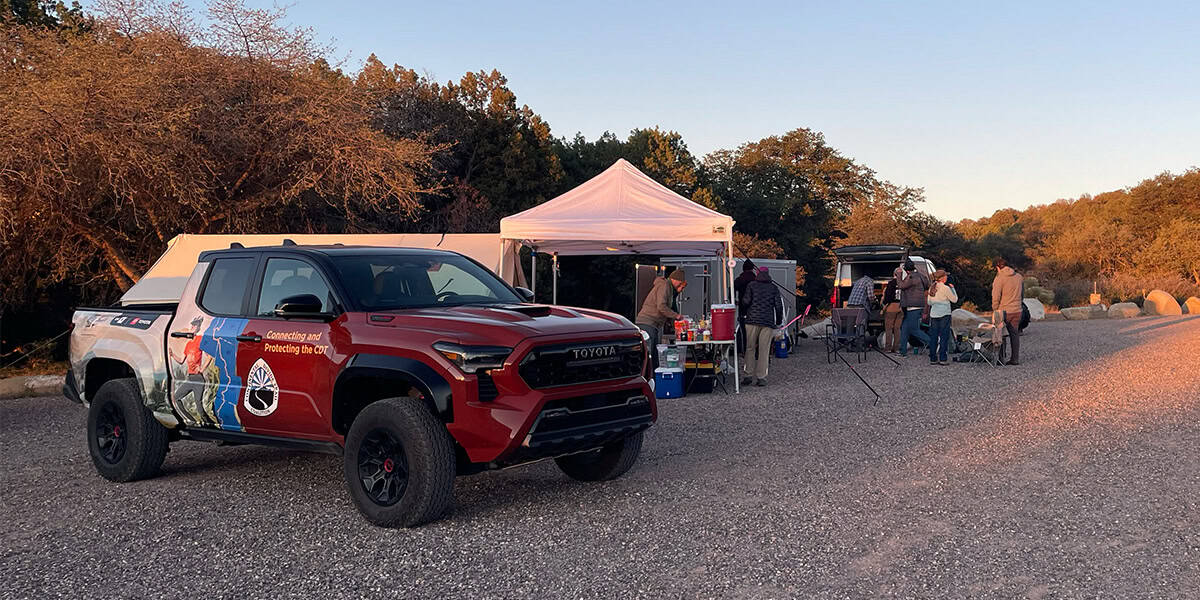
Basecamp at the Neglected Mine Reroute project. This final project came to fruition through the generous support of Toyota and OnX Maps.
Get Involved
Planning for 2026 volunteer projects is well underway, and registration will open in early February!
Stay up to date on all things CDT.